
Learning from the Lionesses
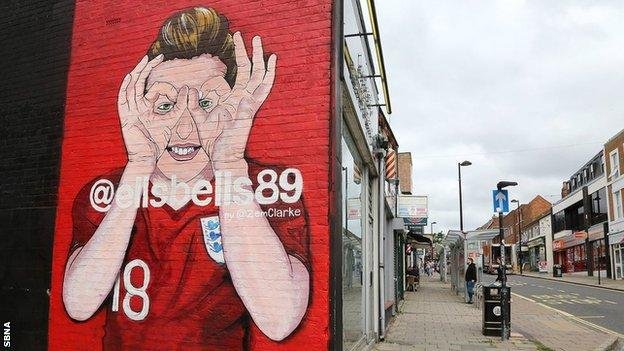

Last weekend, history was made when England won the EUFA Women’s Euros 2022.
Many records had been set during this year’s Euros by the Lionesses reported by EUFA, such as ‘most goals in a tournament’, ‘most goals in a group stage’ and ‘most goals in the first half’.
Women’s football is on the up each year as more and more people are buying tickets to see the amazing talent on the pitch. A total of 87,192 fans crammed into Wembley Stadium to see England triumph in the final, taking the total attendance for the tournament to 574,875 – yet another record!
Women’s football has not had the easiest start. It began to pick up traction in the early 1990s but dates back much further than that.
According to The FA and the Guardian, Women had a number of football clubs in the 1890s, however, in 1920, one team stood out above the rest, the ‘Dick Kerr Ladies’. They played multiple international games and had organised a Boxing Day charity match which raised the equivalent of £140,000 today.
Soon after, in 1921, the FA banned all the women’s clubs from playing on their grounds due to their view that football was ‘quite unsuitable for females’. There was also the reasoning that the huge amount of money that was being raised was out of their control – It was not supporting the war soldiers and was going towards political and working-class causes.
This changed after 51 years when the ban was lifted, and women were allowed to play once again. Since then, women’s football has continuously grown, from being allowed to play all major tournaments, establishing a Women’s Football Committee, to now winning the EUFA Women’s Euros 2022.
From gathering a brief history on Women’s football, it’s showcases the hardships that the sport has gone through to become what it is today and shows real determination and dedication from the women who choose to play.
As a charity, we work in key areas around the UK, two being Milton Keynes and Aylesbury. We love hearing success stories from the areas we work in, so it’s incredible to hear that the captain of the Women’s Euros 2022, Leah Williamson was from Milton Keynes and one of the England Forwards, Ellen White was from Aylesbury. It gives a great sense of hope to those who we support in these areas as they can see that despite any circumstances that you are in, you can do whatever you set your mind to.
Wikipedia shares that Ellen White attended school in Aylesbury but because the school did not have a girls' football team, so she played with the boys. She also played football with her father’s soccer academy and then played for Aylesbury Town before being scouted by Arsenal at the age of 8. However, at the age of 9, she appeared in the local paper in a report on how she had been banned from playing in a football league with boys.
When hearing stories of people like Ellen White and hearing how she had many setbacks in the beginning to try and get where she wanted to be, such as not having a girls’ team so chose to play with the boys, but then getting banned from the team with the boys but still choosing to play. It’s an incredible example of not giving up at the first hurdles and looking for other opportunities and paths to get to her end goal.
We can all take something from each and every member of our England Team as they have worked hard, put in the effort, set records, and changed history. At Transitions UK, this is what we strive to bring out in our young people, their sense of purpose, their passion and their dreams and we work with them to support them getting there – which we know they can all do!
If you want to change history and make a difference in the lives of our disadvantaged young people -
If you’re struggling and want to change your life, find out if Transitions UK can help -